24/04/2007

The Berlin School

The Goethe-Institut London is presenting in association with the Cine lumière an intriguing programme of films called Voices Outside the Frame: The Berlin School in Recent German Cinema, between 30 April and 10 May. It will include seventeen films to highlight the work of eleven filmmakers who represent potent individual voices outside the mainstream of German cinema.


About the ‘Berlin School’

German cinema is back on the map, but its geography is not a simple one, and hence the attempts at naming its locations by defining groups and schools. The group sometimes referred to as the ‘Berlin School’ are a loose network of directors, friends or past collaborators, all based in Berlin, whose films share certain stylistic characteristics and thematic concerns. There is a restrained observant quality to many of the films; dialogues are spare, music rare; takes are often long, frames artfully composed. There is a tendency to show rather than to tell and to activate the viewer to watch and listen carefully and to fill in gaps. Though often described as ‘realist’, direct references to social and polticial issues are rare; the films are instead finely-nuanced representations of life in contemporary Germany, particularly of middle-class families, and teenagers during their difficult transition into adulthood.

The first generation of the Berlin school is represented by Thomas Arslan (Dealer, A Fine Day), Christian Petzold (Wolfsburg, Ghosts) and Angela Schanelec (Passing Summer, Marseille) who went to the Berlin Film and Television Academy (dffb), started their careers in the 90s and have made a number of films to date. They have been joined by a younger group of filmmakers who gravitated towards Berlin from other cities and film schools in Munich (Christoph Hochhäusler, Benjamin Heisenberg), Vienna (Valeska Grisebach) and Hamburg (Henner Winckler, Ulrich Köhler) and of whom most have completed two feature films in the past five to six years. In the film magazine Revolver co-founded and edited by Hochhäusler and Heisenberg, this group of filmmakers has an important platform for sharing know-how and ideas with each other and the audience.

The Films

In Wolfsburg Christian Petzold applies restraint and precision to a tragic story of guilt and revenge in which a man kills a boy with his car and tries to make up for his misdeed by trying to help the mother over her grief. Grief over a lost child is also a driving force in Petzold’s Ghosts, in which a French woman’s search for her abducted daughter leads her back to Berlin and to a young drifter who may be or may not be her child. Berlin is also the setting for Angela Schanelec’s Passing Summer which spins an intricate web of relations between a group of friends and relatives against the background of the city’s cafés, parks and lakes in the summer. Schanelec’s Marseille in contrast focuses on one person, a young photographer from Berlin, who swaps flats and tentatively tries to reinvent herself in the French city. A clearer purpose seems to drive the young Turkish-German actress in Thomas Arslan’s A Fine Day as she moves through sunny Berlin, meets a number of people and actively pursues her idea of happiness. It is also summer and the colours are rich and vibrant in Thomas Arslan’s Dealer, about a melancholy small-time gangster hoping for a big break.

Valeska Grisebach’s particular gift lies in her work with non-professional actors both in her first feature Be My Star, a gentle portrayal of first love and Longing, which, set in rural surroundings of Berlin, is a quietly-told melodrama about a man who finds himself in love with two women. Sleeper is a finely-textured psychological study of a young scientist pressed by the secret service to spy on his Algerian colleague suspected of terrorist involvement. Maria Speth’s The Days Between takes us into the moody twilight world of a young woman suspended between day and night-time jobs, a boyfriend and a lover, between youth and adulthood.

Ulrich Köhler provides the laconic portraits of two deserters: in Bungalow the deserter is young recruit who casually absents himself from his military service to hang out at his parents’ abandoned house; in Windows on Monday it is a young doctor who leaves her husband, daughter and a half-renovated house and ends up as a witness to the absurd proceedings in a remote off-season hotel. In Christoph Hochhäusler’s tense contemporary re-telling of the Hänsel and Gretel story, This Very Moment, two children are left to wander the lonely region near the German-Polish border when their irritated step mother throws them out of the car. In Hochhäusler’s similarly un-nerving second feature, Low Profile, a new school leaver starts anonymously claiming responsibility for local disasters to escape from the frustration of failed job interviews. Henner Winckler’s equally perceptive study of adolescense, School Trip, accompanies a class of secondary school students to a Polish seaside town where competition between one of the students and a young Polish guy lead to disaster.

The season also includes two filmmakers who don’t consider themselves part of the Berlin School, but whose latest films certainly reveal an interest in similar themes. Though stylistically different, Matthias Lutthardt’s Pingpong and Stefan Krohmer’s Summer 04 both focus on middle class families whose seemingly ordered lives are thrown off balance by the intrusion of unexpected visitors and the sexual tension between teenagers and adults.

About the Season

Among the seventeen films on the line-up, there will be UK premieres for Bungalow, Low Profile and Marseille, and a special preview of Longing, ahead of its UK-wide release through the bfi on 18 May. Among the filmmakers travelling to London to support their films will be Christoph Hochhäusler, on hand for an intro and Q&A to the double bill of his films This Very Moment and Low Profile on 1 May; Christian Petzold, to introduce his film Wolfburg on 8 May, and for a Q&A following the London premiere of his feature Ghosts on 9 May; and Benjamin Heisenberg, supporting his film Sleeper on 8 May.

Acknowledging the debt of German filmmakers to French cinema, a talk by the German film critic Ekkerhand Knörer entitled ‘Elective Affinities: The Presence of France and French Film in Recent German Cinema’ will introduce the season on 30 April, together with a Revolver-Live! event focusing on ‘The Politics of Contemporary German Cinema’ organised in collaboration with the German film magazine Revolver.

Goethe Inst. +

Lumière +

Event: Mosaïques festival, London

The Institut français’ yearly 'celebration of cultural diversity', Mosaïques, is back for its 9th edition, and the programme also includes cinema, so a good chance to catch up on world cinema. Venues include the Ritzy Cinema (11–17 May), the Greenwich Picturehouse (16 & 20 May), the V&A (26/27 May & 2/3 June) and the British Museum (22 June).

This year’s line-up includes some UK premieres. There’s new work by Tony Gatlif (Transylvania), Singapore’s Royston Tan (4:30) and Mahamat-Saleh Haroun, who will join audiences for a screening of his first film Bye Bye Africa and for previews of his latest feature, Daratt (Dry Season). From Egypt, two modern portraits of the capital – These Girls and The Yacoubian Building – will screen with Youssef Chachine’s 1957 classic Cairo Station. And from Algeria, director Rabah Ameur-Zaïmeche will join us for screenings of his dyptic Wesh Wesh, What’s Up? and Bled Number One, shown here in conjunction with recent video work by artist Zineb Sedira, part of a large strand of films examining what it means to be Algerian today. Screening as a counterpoint to these contemporary films will be the 1965 classic The Battle of Algiers followed by a Q&A with Saadi Yacef, a veteran of the battle, producer and actor in the film and author of the book on which the film is based. Other names attending include actor Birol Ünel (star of 2004’s Head On) for the preview screening of Transylvania, Kazakh director Rustam Khamdamov (Vocal Parallels), and from Argentina, Alexis Dos Santos, director of the coming-of-age tale Glue.


Institut Francais

23/04/2007

Reading tip

"The result is an utterly charming comedy of sexual manners that should do very well wherever audiences appreciate savvy dialogue and smart, observational filmmaking."

Full article +

20/04/2007

David Lynch Paris show

An article about David Lynch's show, The Deformation Man: David Lynch's Chimerical Universe of Metamorphosis, at the Fondation Cartier pour l'art contemporain to 27 May.


Trailer: Tell No One

I'm not really the biggest fan of police chases, but I have to admit to having enjoyed quite a lot this manhunt shown in the trailer of the upcoming French film Tell No One, based on the thriller by by Harlan Coben. The film is a due for a 15 June UK release.

Tell No One trailer +

Tell No One French site +

Cannes announces line-up for this year's festival

The line-up for the 2007 edition of the Cannes Film Festival was announced yesterday. "My Blueberry Nights" starring singer Norah Jones -- the first English language film from Wong Kar-Wai -- will open the 60th Cannes Film Festival. The singer stars in the story of a young woman who travels across America to find answers to her questions about the true meaning of love. The festival takes place between 16 and 27 May and it will include the world premiere of Michael Moore's latest crockie, "Sicko."


Full list:

In Competition

"My Blueberry Nights," directed by Wong Kar-Wai
"Auf Der Anderen Siete," directed by Fatih Akin
"Un Veille Maitresse," directed by Catherine Breillat
"No Country For Old Men," directed by Joel & Ethan Coen
"Zodiac," directed by David Fincher
"We Own The Night," directed by James Gray
"Les Chansons D'Amour," directed by Christophe Honore
"Mogari No Mori," directed by Naomi Kawase
"Breath," directed by Kim Ki Duk
"Promise Me This," directed by Emir Kusturica
"Secret Sunshine," directed by Lee Chang-dong
"4 Luni, 3 Saptamini Si 2 Zile," directed by Christian Mungiu
"Tehilim," directed by Raphael Nadjari
"Stellet Licht," directed by Carlos Reygadas
"Persepolis," directed by Marjane Satrapi and Vincent Paronnaud
"Le Scaphandre et le Papillon," directed by Julian Schnabel
"Import Export," directed by Ulrich Seidl
"Alexandra," directed by Alexandre Sokourov
"Death Proof," directed by Quentin Tarantino
"The Man From London," directed by Bela Tarr
"Paranoid Park," directed by Gus Van Sant
"Izgnanie" (The Banishment), directed by Andrey Zvyagintsev

British director Stephen Frears will serve as the president of the Cannes competition jury and will be joined by actress Maggie Cheung from Hong Kong, actress Toni Collette from Australia, director and actress Maria de Medeiros from Portugal, director and actress Sarah Polley from Canada, director Marco Bellocchio from Italy, writer Orhan Pamuk from Turkey, director and actor Michel Piccoli from France, and director Abderramane Sissako from Mauritania.

Out of Competition

"Sicko," directed by Michael Moore
"Ocean's Thirteen," directed by Steven Soderbergh
"A Mighty Heart," directed by Michael Winterbottom

Midnight Screenings

"Boarding Gate," directed Olivier Assayas
"Go Go Tales," directed by Abel Ferrara
"U2 3D," directed by Catherine Owens and Mark Pellington

Special Screenings

"11th Hour," directed by Leila Conners Petersen and Nadia Conners
"The War," directed by Lynn Novick and Ken Burns
"Retour en Normandie," directed by Nicolas Philibert
"He Fengming," directed by Wang Bing

Un Certain Regard

"Le Reve de la Nuit d'Avant," directed by Valeria Bruni-Tedeschi
"Calle Santa Fe," directed by Carmen Castillo (first film)
"Munyurangabo," directed by Chung Lee Isaac (first film)
"Et Toi T'Es Sur Qui?" directed by Lola Doillon (first film)
"El Bano del Papa," directed by Enrique Fernandes and Cesar Charlone (first film)
"Bikur Hatizmoret," directedd by Eran Kolirin (first film)
"Mister Lonely," directed by Harmony Korine
"Magnus," directed by Kadri Kousaar (first film)
"Mang Shan," directed by Li Yang
"Mio Fratello E Figlio Unico," directed by Daniele Luchetti
"California Dreamin' (Nesfarsit)," directed by Christian Nemescu (first film)
"La Soledad," directed by Jaime Rosales
"L'Avocat de la Terreur," directed by Barbet Schroeder
"Les Pieuvres," directed by Celine Sciamma (first film)
"Am Ende Kommen Touristen," directed by Robert Thalheim
"Kuaile Gongchang," directed by Ekachai Uekrongtham

The Un Certain Regard jury includes head Pascale Ferran, along with Jasmine Trinca, Cristi Puiu, Kent Jones and Bian Qin and the Camera d'or jury for a film by a first time director will be headed by Pavel Longuine along with Julie Bertucelli, Clotilde Courau and Renato Berta.

Short Films in Competition

"Run," directed by Mark Alston (New Zealand)
"The Oate's Valor," directed by Tim Thaddeus Cahill (United States)
"The Last 15," directed by Antonio Campos (United States)
"Ah Ma" (Grandma), directed by Anthony Chen (Singapore)
"Resistance Aux Tremblements," directed by Olivier Hems (France)
"Ark," directed by Grzegorz Jonkajtys (Poland)
"Ver Llover," directed by Elisa Miller (Mexico)
"To Onoma Tou Spourgitiou," directed by Kyros Papavassiliou (Cypress)
"Spegelbarn" (Looking Glass), directed by Erik Rosenlund (Sweden)
"Het Zusje" (My Sister), directed by Marco Van Geffen (The Netherlands)
"My Dear Rosseta," directed by Yang Hae-hoon (South Korea)

La Cinefondation

"Aditi Singh," directed by Mickael Kummer (Le Fresnoy, France)
"Ahora Todos Parecen Contentos," directed by Gonzalo Tobal (Universidad del Cine, Argentina)
"Your Younger Daughter Rachel," directed by Efrat Corem (Sapir Academic College, Israel)
"Chinese Whispers," directed by Raka Dutta (Satyajit Ray Film & Television Institute, India)
"For the Love of God," directed by Joseph Tucker (NFTS, U.K.)
"Goyta," directed by Joanna Jurewicz (NYU, U.S.)
"Hable Stunden," directed by Nicolas Wackerbarth (DFFB, Germany)
"Minus," directed by Pavle Vuckovic (Fakultet Dramskih Umetnosti, Serbia)
"Pathways," directed by Hagar Ben-Asher (Minshar School, Israel)
"Imprudence," directed by Alexander Kugel (VGIK, Russia)
"A Reunion," directed by Hong Sung-hoon (KAFA, South Korea)
"Rondo," directed by Marja Mikkonen (Finnish Academy of Fine Arts, Finland)
"Way Out," directed by Chen Tao (Beijing Film Academy, China)
"Saba," directed by Therezaa Menezes and Gregorio Graziosi (FAAP University, Brazil)
"Triple 8 Palace," directed by Alexander Ku (NYU, U.S.)
"Vita Di Giacomo," directed by Luca Governatori (La femis, France)

18/04/2007

Alternative Distribution" - Miami Film Festival

Here's a link to a 45-minute condensed video version of the hour and a half panel discussion on alternative distribution held at the Miami Film Festival last month.

Watch +

Pitching film projects

Tomorrow (Thursday 19/4) evening there will be a course given by indepedent producer Rebecca Knapp, on how to pitch a film project. The course takes place between 6 and 9pm at SOAS, Kings Cross, London. Click here for further information.

16/04/2007

Hibernator: prince of the petrified forest - final screening 29/4

This sounds like an interesting experiment.

Working with the legacy and personal myth of Walt Disney, cryogenically frozen at the point of death, London Fieldworks proposed his reincarnation and have created the animatronic Hexer, to stand in for his alter-ego and to star in their film prince of the petrified forest.

In the Upper Space at Beaconsfield a green-screen environment provides an installation and working animation studio for London Fieldworks. There sits the animatronic sculpture, a monstrous hybrid of Disney and his iconic characters, Bambi and Thumper. The chimera is called to perform for camera, the power of his actions modulated by light cues reported from the window on the back wall of the gallery.

The animation in progress draws inspiration from Felix Salten's anthropomorphic novel Bambi: A Life in the Woods, first published in 1928 and the source for Walt Disney's iconic 1942 animated feature film Bambi. But realised through the combined expertise of specialists in prosthetics and robotics, Hexer is a creature of his time and the landscapes he encounters are far from Disney's idealised forest.

Over the exhibition period of twenty eight days, Hexer's activity is digitally recorded by the artists and incorporated into their film, the process exposed to the public. The final day of the exhibition will culminate in the premiere of the completed film, and Hexer will return to slumber.

Closing Event: Final Film Screening
Date: Sunday 29 April
Time: 2pm

Full Screening followed by panel discussion with collaborators Steve Beard, Paul and Laura Carey, Bruce Gilchrist and Jo Joelson

Free entry but booking advisable. Call Beaconsfield on 020 7582 6465.


Beaconsfield Gallery +

London Fieldworks +

14/04/2007

Life on the Other Side of the Wall


Before its well deserved success at the European Film Awards and the Oscars, Florian Henckel von Donnersmarck's The Lives of Others (Das Leben der Anderen) was the final film of the competition program at the 36th Molodist Kiev Film Festival last year. It may well have taken the winning prize were it not for the fact that there was the expected strong competition – with films such as Euphoria (Eyforiya), Fresh Air (Friss levego), and 12:08 East of Bucharest (A fost sau n-a fost) – but also in that it was the final screening and finished just half an hour before a decision was required. As a result it won neither of the two main prizes but in light of this The Lives of Others deserves special acclaim. Subsequent awards have deservedly brought it to the attention of the world cinema-going public ahead of its release this week in the UK and review in Kamera. See alternate review here

Cambridge festival goes alfresco

Cambridge Film Festival, in association with The National Trust and Screen East, is presenting a programme of screenings in settings across the Eastern region of England. The season begins in April at Wimpole Hall in Cambridgeshire with a chance to see The Queen on Friday 27 April and a new print of David Lean’s classic Great Expectations on Saturday 28 April.

Cambridge screenings

13/04/2007

Clip: The Glamorous Life of Sachiko Hanai


"A riotous amalgam of political satire, apocalyptic comedy and steamy erotica, The Glamorous Life of Sachiko Hanai is an insanely entertaining example of the Japanese pink film (pinku eiga) genre, a popular form of erotic softcore cinema. Titillation is, of course, a primary goal, but due to Japan's censorship codes (no depiction of genitalia or penetration is allowed), creative storytelling is also important. When both factors are present, as in this memorably nutty offering, the result is particularly pleasurable. Sachiko Hanai (Emi Kuroda) is an escort who specializes in teacher-student scenarios (the film's delightfully apposite original title is Horny Home Tutor: Teacher's Love Juice). One day, after an energetic tutoring session, Sachiko adjourns to a nearby café. An argument between two men escalates, and she is shot between the eyes. Miraculously only dazed, she grabs a mysterious cylinder from the café floor, thus making off with a clone of George W. Bush's finger. And then things get really weird. Sachiko discovers odd psychic abilities and begins imagining various theories of the universe and multivalent philosophical speculations, all to the throb of techno. While she pursues arcane poststrucuturalist knowledge—and has intellectual intercourse with a political philosopher—a consortium of bad guys chase her in the hopes of recovering the cylinder. Raunchy and hilarious in equal measures, with a dash of smart political commentary, Mitsuru Meike's memorable feature will undoubtedly tickle you pink."

(From the notes of the San Francisco International Film Festival 2006 by Rod Armstrong)

11/04/2007

New on Kamera: reviews of new releases

Colin Odell and Michelle Le Blanc have penned reviews of two of this week's UK theatrical releases. Our regular contributing duo have showered with praise The Lives of Others and The Curse of the Golden Flower.

300

..."like Baz Luhrmann’s Moulin Rouge, it’s post-cinema, and not created for the purpose of traditional entertainment, let alone edification. It’s onslaught filmmaking, the new form that’s self-defeating in its cacophony and nearly religious in its zealotry for its own form and mythos."

Read more +

10/04/2007

YouTube tip: Fassinder's second short film, Das Kleine Chaos

Via Expanded Cinema: "Rainer Werner Fassbinder's second 16mm short--made while still a theatre director in Munich---shows the young filmmaker clearly under the influence of the French nouvelle vague [complete with a poster of Juliette Greco], yet already hinting at the recurring themes of his mature work. Theo (played by Christoph Roser, who financed the film in return for a staring role), Marite (Marite Greiselis), and Franz (played by Fassbinder) turn their love of American noir into a crime spree, even if one reflecting on the moral nature of violence and crime, and in typically Fassbinder fashion, the chaos of postwar culture [after breaking into a woman's house to rob her and putting a Wagner record on the phonograph, Fassbinder's character asks his hostage: "Do you love the Fuhrer?"]. Fassbinder himself appears under his frequent character alias of 'Franz'---inspired by his love of Alfred Doblin's novel 'Berlin Alexanderplatz.'

Sci-Fi London opens bookings

Our friends from the Sci-Fi London have written to say booking for the sixth edition of the festival is now available online (see link below). The festival takes place between 2 and 6 May at the Apollo West End in London.

Sci-Fi London +

05/04/2007

Berlin Alexanderplatz on a loop

Those lucky enough to be holidaying in Berlin should pay a visit to the KW Institute for Contemporary Art at the famous Auguststraße 69 to see the exhibition of Rainer Werner Fassbinder's Berlin Alexanderplatz, the monumental film he made for television and based on Alfred Döblin’s 1929 novel. The film consists of thirteen episodes and an epilogue, and runs to fifteen hours and thirty-nine minutes. When it was first screened in Germany in 1980, it triggered heated debates and gained international recognition as one of the film masterpieces of the past decades. The show is a follow-up to the screening at the last Berlinale.

The episodes and the epilogue of Berlin Alexanderplatz will be screened in permanent loop in fourteen separate rooms. In addition, all the episodes are shown in chronological order and full length on a central big screen. Visitors can thus decide how they approach Berlin Alexanderplatz: they can divide its unusual length up into pieces, watch episodes several times, or return to the exhibition whenever they like, as the entrance ticket entitles holders to repeated visits. The exhibition also presents stills from the film’s 224 scenes. A further, highly personal document are the tapes on which Fassbinder himself recorded his script for the film and which have never previously been made accessible to the public.

The exhibition is accompanied by a catalogue (in German; English edition planned; approx. 600 pages), edited by Klaus Biesenbach, with essays by Susan Sontag and Rainer Werner Fassbinder. The show runs until 13 May 13.

KW +

03/04/2007

Jan Nemec and the Party Poopers

It's taken 41 years but Jan Nemec's landmark Czech New Wave film The Party and the Guests (O slavnosti a hostech) has finally got a DVD release courtesy of Second Run DVD.


Extremely controversial upon its release, Jan Němec's second feature, after Diamonds of the Night, was completed in 1966 and had a belated release during the short-lived Prague Spring in early 1968. The Party and the Guests was formally "banned forever" in 1973 and this ban remained (at least in Czechoslovakia) until the Velvet Revolution of 1989. It was widely considered at the time that the film was a direct attack on the Communist government and therefore too dangerous to screen. This opinion (or fear) was one that was shared by Antonín Novotný, the Czechoslovak President at the time.

However, this ban was only to enhance Nemec's (now legendary) status as a maverick and enfant terrible in a generation of Czechoslovak directors who were all making films that were on the periphery between acceptable or in breach of the Communist Party line. After living and working in exile from the end of the 1960's, Jan Nemec was to return to his homeland after the Velvet Revolution.

Click here for more on Jan Nemec and Czechoslovak New Wave Directors.

Saint Etienne at the South Bank Centre

In association with Agnès B, Saint Etienne present tomorrow an evening called Paris in the Spring, whose flyer alone makes the visit to the often un-spring-y South Bank worthwhile.


South Bank +

Call for papers

Film & History, the Historians Film Committee's journal of interdisciplinary analysis of film, is accepting submissions on the topic, 'The Documentary Tradition'.

"The first volume will focus on a spectrum of documentaries in chronological order ­of both international and US vintage. Classic documentaries will be examined and placed in their cultural contexts. Papers on films from Nanook and March of Time to The War Room and An Inconvenient Truth are welcomed", said the editor Dr. Loren PQ Baybrook.

She added: "The second volume will examine a variety of topics and issues for documentaries across cultures and borders. The possibilities here are broad, but we welcome papers that stress the role of the documentary in interpreting, reflecting, or attempting to change history. Race, class, policy, and the impact of media are likely topics."


Further info +

01/04/2007

Curzon launches magazine

Curzon cinemas has launched a bimonthly magazine and issue one is available for free from Chelsea, Renoir, Richmond, Mayfair or Soho. The issue puts the focus on the German film The Lives of Others, soon to be reviewed on Kamera. You can listen to a podcast featuring an interview with the film's director, Florian Henckel von Donnersmarck +

30/03/2007

A Rendez-vous with French Cinema

Our friends from A Rendez-vous with French Cinema, which started yesterday and goes until Sunday, 1 April, have rung in to say that they will take time on Friday March 30 (that will be today!) to celebrate up and coming acting talent with a special on stage presentation at the Curzon Mayfair prior to the 6.00 pm screening of Guillaume Canet’s Tell No One (Ne le dis à personne).


Actor/director Jean-Marc Barr and director/screenwriter Pascal Arnold will introduce the following actors on stage :

Amira Casar: a César nominee as Best Newcomer, her credits incluide Breilllat’s Anatomy of Hell and Thomas Gilou’s Would I Lie to You ?
Sara Forestier: has worked with Blier and Lelouch, having made her début in Abdellatif Kechiche’s much admired L’Esquive, winning a Best Newcomer César
Georges Babluani: best known for his work with his brother Géla Babluani in 13 Tzameti and Legacy

Emilie Dequenne: made her début in the Dardennes’ Rosetta, winning the 1999 Best Actress prize ex aequo in Cannes, and worked with Claude Berri in Une femme de ménage.

Louis Garrel: worked with Huppert in Ma Mère, was in Bertolucci’s The Dreamers, and won the Best Newcomer César for his part in his father Philippe’s Les amants réguliers
Joana Preiss: in Assayas’ section of Paris je t’aime and Clean, as well as Honoré’s Ma Mère

Tom Riley: English born star of the recently released I Want Candy, seen opposite Juliette Binoche in A Few Days in September.

Luke Treadaway: made his début in Keith Fulton and Louis Pepe’s Brothers of the Head.


In addition to screenings of the best of the new French films, A Rendez-vous with French Cinema will have diverse programme of masterclasses, meetings, and screenings of short films. This event is organised by Unifrance, the organisation dedicated to promoting French cinema abroad, in association with the French Embassy and the French Institute in London and the Curzon Mayfair cinema.

Rendez-vous with French Cinema +

21/03/2007

Runa Islam

British film artist Runa Islam has told Frieze magazine which films have influenced her most. Carl Dreyer's Joan of Arc (1928) has a place of prominence in Islam's film catechism book.


Full article +

20/03/2007

YouTube awards

The title says it all...


YOUTUBE AWARDS +

London Lesbian and Gay Film Festival kicks off on Wednesday

The 21st London Lesbian and Gay Film Festival, the UK's third largest film festival, starts this Wednesday, 21 March. Among the feature film highlights this year are Beyond Hatred, a documentary that charts the aftermath of a homophobic murder, the Danish drama A Soap, about the relationship between a beautiful girl and her transsexual neighbour, and the Argentinian production Glue (pictured), which won top jury and audience awards at the 2006 Buenos Aires Festival of Independent Film.


FESTIVAL SITE +

19/03/2007

Brazilian video at the Tate

A short post to let you all know that I have curated a season of Brazilian video art for the Tate Modern in London and which will be shown at the Starr Auditorium between Friday 23 March and Sunday 25. The videos cover a period of 25 years (1981-2005). The event, called Video Links Brazil kicks off on Friday with a programme of videos from the 1980s, the decade when video art took root in the country. Saturday will focus on works produced from the 1990s onwards and brings together an ecclectic selection of videos by fine artists as well as by those working exclusively with video. Sunday is devoted to documentaries, including one video about Brazil's famous Serial Kisser and a film from the Video in the Villages project, which works with aboriginal peoples in Brazil to help them produce their own images and represent themselves.

Hope to see there.

(Image credit: Heróis 2, TVDO, 1987-2003)


VIDEO LINKS BRAZIL

16/03/2007

New on Kamera

Edward Lamberti has written an in-depth review of Clint Eastwood's Letters from Iwo Jima. We also have a news article about the cult cinema conference in London called Cine Exces, which will be attended by no one less than Roger Corman.

13/03/2007

A tube ride will never be the same...

Watch this +

Woody Allen to make film in Barcelona

"For some cities and countries, having Woody Allen making a film there is like a papal visit," Adam Dawtrey, the European editor of Variety magazine, said.


Full article +

06/03/2007

Time Out New York

Time Out New York has compiled a sequence of YouTube videos with "25 memorable moments in Gotham music". Although music-focused, the list also contains excerpts from films.
Fun.

Gotham music +

05/03/2007

Charles Atlas at London's Optronica

Video pioneer and now VJ extraordinaire Charles Atlas brings his collaboration with musician/ electronic composer Christian Fennesz, to London, between 14 and 18 March, during the second biannual Optronica festival. Charles mixes video live using film footage, prepared clips and improvised collage. The recipient of the 2006 John Cage Award, Atlas is perhaps best known for his work with choreographers such as Michael Clark, Leigh Bowery, and Merce Cunningham, which have won him three Bessie (New York Dance and Performance) Awards. Optronica is a 'visual music' festival taking place at the British Film Institute's Southbank and Imax spaces, as well as the Institute for Contemporary Art. The line-up also includes the UK premiere of Peter Greenaway's Tulse Luper VJ performance, among many other attractions.

Speaking of Greenaway, the fallen angel of post-modern baroque cinema, has a Myspace page. His tagline is bafflingly amusing: "Cinema is not a playground for Sharon Stone." Poor Sharon, what has she done to him? Now, why is it that cinema can be a playground for Helen Mirren, but not for the France-loving Stone? He also says, with no hint of modesty: "Film is dead, I tried to save it, didn't work out...enjoy your psycho-dramatic linear narrative you bloody philistines. "

Optronica +

Peter Greenaway on Myspace +

It's not a colour but a quality issue

I was reading my favourite newspaper over the weekend, the International Herald Tribune (inspired, of course, by Godard's insertion of the title in À bout de souffle), when an article about international distribution of Hollywood films with black stars caught my attention. The gist of the article was that such films don't do well abroad and used the case of Dreamgirls (pictured left) which has grossed $100 million and has sold 'only' $28 million worth of tickets in foreign lands, as a case in point. One industry insider interviewed went as far as to name 'international' (as in 'international markets') 'the new South' because in the old days black films didn't travel down South within the US. The article does mention some success stories, such as Bad Boys (with Will Smith) and Déjà Vu (with Denzel Washington), but underlines flops like Hustle & Flow, Are We There Yet? and Last Holiday as examples of the failure cases where racism may have been the causal factor.

But this is clearly a case of crying wolf. The article in premised in the assumption, or America's utter conviction, that any national artifact is apt for global consumption, even in the case of films heavily coded with regional signs as the ones mentioned. Secondly, and most importantly, is the sheer awfulness of such films - doesn't it occur to them that some films don't do well abroad because they are not sound for consumption as a consequence of their excessive mediocrity? To me, the article seemed like a case of the empire playing the underdog card and such posturing doesn't strike convincing at all.

Read full article +

04/03/2007

Kenneth Anger article

Tom Gunning has written an insightful article about Kenneth Anger for ArtForum magazine.

01/03/2007

New on Kamera:


The latest updates on Kamera include a round-up of film festivals in March+* , some of the latest DVD releases + , an in-depth review of Until the End of the World + , by Wim Wenders and a review of A Guide to Recognising Your Saints +


* STOP PRESS! The organisers of A Rendez-vous with French Cinema have sent us an update on the programme of the event, which is now ready.

The Opening Gala on 29 March will feature Olivier Dahan’s biopic of iconic singer Edith Piaf’s dramatic life, LA VIE EN ROSE (La Môme, pictured), featuring a remarkable performance by Marion Cotillard alongside Sylvie Testud, Pascal Greggory, Emmanuelle Seigner, Jean-Paul Rouve and Gérard Depardieu (released in May/June by Icon Film Distribution). After opening the Berlin Film Festival, the film is enjoying phenomenal critical and box office success in France.

The other films to be featured are as follows:

Alanté Kavaité’s thriller ECOUTE LE TEMPS, starring Emilie Dequenne, Ludmila Mikaël and Mathieu Demy (released in Summer/Autumn by Dogwoof Pictures).


Guillaume Canet’s thriller TELL NO ONE (Ne le dis à personne), which won 4 Césars at the recent ceremony, and stars François Cluzet, Kristin Scott Thomas, André Dussollier and Marie-Josée Croze (released on 15 June by Revolver Entertainment).


Christophe Honoré’s drama DANS PARIS starring Romain Duris, Louis Garrel, Guy Marchand and Joanna Preis (released on 4 May by Artificial Eye).


Stéphane Brizé’s comedy/drama NOT HERE TO BE LOVED (Je ne suis pas là pour être aimé), starring Anne Consigny, Patrick Chesnais and Georges Wilson (released on 8 June by Artificial Eye).


The legendary Alain Resnais’ PRIVATE FEARS IN PUBLIC PLACES (Cœurs), starring Sabine Azéma, Lambert Wilson, André Dussollier and Isabelle Carré (released on July 20 2007 by Artificial Eye).


Santiago Amigorena’s thriller A FEW DAYS IN SEPTEMBER (Quelques jours en septembre), starring Juliette Binoche, Sara Forestier, Tom Riley, John Turturro and Nick Nolte (released in Summer/Autumn 2007 by Transmedia International Releasing).


Tony Gatlif’s drama TRANSYLVANIA, starring Asia Argento, Amira Casar and Birol Unel (released on 10 August by Peccadillo Pictures).


The Babluani brothers’ drama LEGACY (L’Héritage), starring Sylvie Testud, Stanislas Merhar, Pascal Bongard and Georges Babluani (released in July by Revolver Entertainment).


Bruno Dumont’s topical drama FLANDERS (Flandres), starring Adélaïde Leroux, Samuel Boidin and Henri Cretel (released on 6 July by Soda Pictures).


Xavier Giannoli’s comedy THE SINGER (Quand j’étais chanteur), starring Gérard Depardieu, Cécile de France, Mathieyu Amalric and Christine Citti (released on 17 August by Artificial Eye).

The Closing Night Gala will be Patrice Leconte’s comedy MY BEST FRIEND (Mon meilleur ami), starring Daniel Auteuil, Dany Boon and Julie Gayet (released on 11 May by Optimum Releasing).

NFT shows Alejandro Jodorowsky’s El Topo

There's a good excuse to make that inevitable trip to the National Film Theatre in London this April. El Topo (1970), Alejandro Jodorowsky’s uncut cult masterpiece will screen at the venue on April 6 and then at cinemas nationwide.

A bizarre, ultra-violent, allegorical Western, EL Topo is set in two halves that have been compared to the Old and New Testaments of the bible. In the first half, Jodorowsky plays a violent, black-clad gunfighter who, accompanied by his naked son, sets off on a murderous mission to challenge four zen masters of gunfighting, and learns from each of them a Great Lesson before they die. In the second half, El Topo sets out to find personal redemption, secluding himself in a subterranean community to learn the ways of peace, but unfortunately death is never far away.

El Topo paved the way for cult favourites such as Eraserhead, The Harder They Come and The Rocky Horror Picture Show. John Lennon and Yoko Ono were huge fans of the film and pushed Allen Klein (then Beatles manager) to buy it for distribution, and subsequently to finance Jodorowsky’s next film The Holy Mountain (1973) which will also screen at the NFT alongside Fando & Lis (1968). All three films have been digitally restored and remastered, under the close supervision of the director himself, who will give an onstage talk at the NFT on April 13.

Jodorowsky at the NFT+

26/02/2007

Harmony Korine's Mister Lonely

Kamera's newswire has been notified that Harmony Korine's new project (his third film), Mister Lonely, has gone into post-production - whether that means it will be hitting the screening theatres any time soon is another story, although we have also been notified that Tartan will be spreading the love in the UK, so the chances are good. So, all those rumours about a comune of impersonators in Scotland are true, as far as the story in the this film goes. Here's the description sent to us (plus picture):


"A Michael Jackson impersonator (DIEGO LUNA) lives alone in Paris and performs on the streets to make ends meet. At a performance in a retirement home, Michael falls for a beautiful Marilyn Monroe look-alike (SAMANTHA MORTON), who suggests he move to a commune of impersonators in the Scottish Highlands. At the seaside castle, Michael discovers everyone preparing for the commune's first-ever gala - Abe Lincoln, Little Red Riding Hood, the Three Stooges, the Queen, the Pope, Madonna, Buckwheat, Sammy Davis. And also Marilyn's daughter Shirley Temple and her possessive husband Charlie Chaplin (DENIS LAVANT)."

MISTER LONELY, we were also told, was filmed in Scotland, Panama and France. The cast is more stellar than you would expect: Diego Luna, Samantha Morton, James Fox, Denis Lavant all ring in to boost their indie credits. More fun members of the cast include Anita Pallenberg and Werner Herzog, who also appeared in Korine's previous effort, Julien Donkey Boy.

Oscars 2007

Here are the results of the Oscars 2007.
Yawn+

24/02/2007

Screening: The Hermitage Dwellers

Our friends at the Goethe-Institut have informed Kamera's newsdesk about an upcoming screening next Tuesday at their London branch that caught our attention. So here's the info sent in:


TUE 27 FEB 2007 7PM

DELICATESSEN - GOETHE-INSTITUT DIGITAL CINEMA

THE HERMITAGE DWELLERS


Netherland 2006, colour, 72 mins. Directed by Aliona van der Horst.

With English subtitles.


"Not the art, but the people who work in the Hermitage museum in St. Petersburg are the focus of this documentary film. These Hermitage dwellers all have their own very personal reasons for considering the palace of Catharine the Great their "home." For them, it is a safe haven that quite literally has managed to keep the cruel Soviet history outside its walls. What starts out as a playful kaleidoscope of people and events in the museum gradually unfolds into a poignant account of how the dwellers’ pain is transformed by their intimate relationship with a piece of art.

We meet with several "Hermitage-niks"—including Olga Bogdanova, the head of museum maintenance, icon curator Alexandra Kostsova, museum attendant Valentina Barbashova, and art handler Vadim Kuptsov, among others—each of whom explains their own very personal reasons for considering the palace of Catherine the Great their "home."

For Russians the Hermitage is regarded as a place of pilgrimage. For these workers, however, the Hermitage has also been a safe haven from the tumultuous events of Russian history and the hardships of contemporary Russian life. Indeed, each of them explains how their personal traumas and difficulties have been transformed by having developed an intimate relationship with a favorite piece of art. For them, surrounded everyday by remarkable beauty, the Hermitage has become a place of emotional healing.

For Vadim, formerly in the military in Azerbaijan, where he saw things that no one back home would believe, his job is a tonic for his troubled soul. He likes to look at Rembrandt's Prodigal Son because "it's about forgiveness." Valentina was an atomic engineer who lost her job in the wake of Perestroika. She supplements her meager pension by working as an attendant at the museum and spends many days in the company of Sweert's Portrait of a Young Man, whose subject was as impoverished as she is. Juna Zek is a metalworks curator who admires the precious collection assembled by Catherine the Great and walks through the rooms where she once slept. Alexandra, aged 82, is an icon curator who has spent her entire life rescuing inestimable icons from destruction. Finally, seventy-six-year-old Olga is the unofficial czarina of the Hermitage who runs her department with a firm hand.

THE HERMITAGE DWELLERS also uses archival footage to reveal that while this revered institution has usually managed to keep twentieth-century history outside its walls-from the Revolution, the terror of Stalin, WWII, and the harsh post-Soviet years-these events have also left their indelible mark on the museum.

The film traverses throughout this vast complex, gliding up staircases and through grand exhibit halls, showing curators at work in storage rooms filled with rare art works, groups of tourists and schoolchildren gazing up in wide-eyed wonder, staff members dining and dancing at a Victory Day celebration, and, of course, many of the world-famous paintings and artifacts on display."


Goethe-Institut London+

Independent Spirit Awards

The winners of the Independent Spirit Awards will be announced today. Here's a link to the list of nominees +

21/02/2007

New on Kamera - 21/02/07

Calum Waddel interviews upcoming horror movie star, Jillian Swanson. Full article
here +

Grindhouse


The blog Solace in Cinema has posted news about the Tarantino and Rodriguez double whammy, due out on April 6 in America, Grindhouse. The latest news is that the final poster seems to be ready and that The Weinstein Company will be splitting up the film into two pieces in foreign territories because of their lack of tradition in double bills. The distributors fear those non-English speaking audiences will not get the concept, or perhaps that they are not post-modern enough.

But there's a petition against the split.


Full article +


20/02/2007

Will Write and Direct for Food

Kamera has teamed up with Southbank Publishing to offer its readers the opportunity to purchase for a reduced price Will Write and Direct for Food, by the celebrated director Alan Parker. Known for his acidic wit and uncompromising approach to film making, Parker has often resorted to humour in cartoons, to get his view across. Studio heads, actors and crew, all come under Parker's merciless pen. However, and often to Parker's surprise, the recipient enjoyed the message and framed it. Many of the director's doodles, drawings and sketches adorn the walls of actors, producers, directors and movie executives around the world, often taking pride of place, next to the all-smiling première or award-winning photographs.

This unique collection contains over 200 mini masterpieces from Sir Alan Parker who Will Write and Direct for Food...

"It was always a curiosity to see my vomited scribbles on some studio executive's wall, the very executives they were aimed at. Not that they stay up long. Studio personnel are an itinerant bunch: they come and they go, and I've made 14 films with 14 studio heads. They don't stay long in their jobs, and fade away faster than a Technicolour negative." - Alan Parker

Promotion Link +

Berlin's 2007 winners

Here's a link to this year's results in BERLIN +

17/02/2007

Factory Girl's homophobic overtones

I haven't seen Factory Girl yet, but for me reason I have already taken such a dislike for it that I thought it worthwhile to link to an article in Slate Magazine, a publication that surely tell it like it is, making a scathing review of this film, due out in the UK on 16 March.

"Factory Girl isn't just a bad movie, it's a 90-minute insult to the culture it pretends to be capturing, and what I really want to say—as I would almost never say of anything I see or read or listen to—is that I hated it."
Jim Lewis

Full article +

15/02/2007

New on Kamera - 15/02/07

Hot off the print, as it were, are a review of a book on the films of Luis Buñuel+ , written by Ian Haydn-Smith, and an article about the late film poet, Margaret Tait+ , written by myself.

Enjoy them.


09/02/2007

New on Kamera

We have news on the UK Regional Critics award + , reviews of Babel + , Blood Diamond + and Notes on a Scandal+ plus an in-depth review of the DVD release of Derek Jarman's
Wittgenstein + .

08/02/2007

Coming up: Fast Food Nation

Richard Linklater's much-anticipated fictionalised rendition of Eric Schlosser's book Fast Food Nation is coming to the UK soon and, having caught a preview last night, I'm happy to recommend it. The film opened to mixed reviews in America last November, but in my view it has been criticised for the wrong reasons, such as narrative strands that lead to no conclusion. It is a bleak film that, despite its specific take on the fast food industry, touches on several topics pertinent to globalised capitalism, making it holistic and transnational in relevance. Full review around the time of its 23 March release. Meanwhile catch some video excerpts of the production:


Fast Food Nation's official site +

20/01/2007

Europa Cinemas at the Berlin festival

Further supporting its ongoing campaign to promote European films, Europa Cinemas will return once again to this years Berlin Film Festival, awarding its Label prize to the best European film in the Panorama section (February 8-18). This marks the third year that the Europa Cinemas Label will be awarded at Berlin, and complements the Labels awarded at the Directors’ Fortnight in Cannes, the Venice Days section of the Mostra del Cinema, and Karlovy Vary.

A jury of four Europa Cinemas exhibitors will award the Label at Berlin, with the winning film receiving the support of extended theatrical exposure and additional promotion from the Europa Cinemas network. The Panorama jury will consist of Stas Ravter (Slovenia), Exhibitor at the Kinodvor cinema and General Manager of the Slovenian Cinematheque (Llubljana); Georgette Ranucci (Italy), Exhibitor at the Alcazar cinema in Rome; Michal Drobny (Czech Republic), Manager of the distribution/exhibition company Continental Film in Bratislava and Christian Schmalz (Germany), exbitor at the Off Broadway Kino in Cologne.

Founded in 1992, the Europa Cinemas network now consists of 1,689 screens in 690 cinemas in 403 cities in 55 countries. Europa Cinemas’ aim is to support the programming and visibility of European films outside their country of origin, and to foster initiatives aimed at encouraging younger audiences to develop their interest in European films and cultural diversity.


Europa Cinemas +

15/01/2007

Rotterdam festival

The Rotterdam International Film Festival has announced that its 36th edition will include 38 world, 21 international and 23 European feature premieres, focusing on ´independent and innovative filmmaking´. The full programme will be announced online next Thursday 18th January, and contains a mixture of brand new films, underestimated gems and highlights of the year.

Rotterdam Film Festival +


10/01/2007

Andrzej Munk at London's Riverside 3-17 January 2006

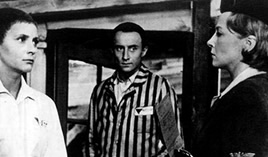
A recent interest in Andrzej Munk’s work started with the distribution company Second Run's DVD release of his film The Passenger late last year. Following on from that, the Polish Cultural Institute in association with the Riverside in London are paying their own tribute to the director who died from a car crash at the tragically early age of 39.


The Passenger plays next week (17th Jan) and, though fictionalised, is one of the most harrowing accounts of Auschwitz you will see, emulating even Alain Resnais's Night and Fog. However, Munk also saw humour in the tragedy of life and tonight's (10th Jan) double-bill at the Riverside starts with his Bad Luck from 1960, about a Polish everyman who always finds himself in the wrong place at the wrong time. It's followed by its Andrzej Kotkowski directed sequel Citizen Piszczyk, made 29 years later and starring Jerzy Stuhr.

The film critic and historian Phiip Kemp will introduce the screenings on 17th Jan that, along with The Passenger, include Munk shorts and The Last Pictures, Andrzej Brzozowski's documentary on the great director from 2001. Brzozowski was Munk's assistant on The Passenger and here he takes us through the film and how he completed it to what he believed were Munk's intentions, also adding phtographs and a voice-over narration.

More information on the Andrzej Munk season at the Riverside can be found on this page

The Online Film Critics choose United 93 as Best Picture...

...with Helen Mirren (The Queen) and Forest Whitaker (The Last King of Scotland) taking Best Acting honours and Martin Scorcese winning Best Director. But the most interesting mentions on their list are in the smaller categories: the critics of the Online Film Critics Society (of which I am a member) choose Richard Linklater's A Scanner Darkly as Best Animated Film, Darren Aronofsky's The Fountain for Best Score, and the screenplays of El laberinto del fauno (Pan's Labyrinth) and Children of Men as Best Original Screenplay and Best Adapted Screenplays respectively, which is interesting since both were written (at least partly) by Mexicans, with El laberinto written in a foreign language (the Spanish-Mexican co-production also won Best Foreign Film). Children of Men also won the Best Cinematography category for its Mexican cinematographer Emmanuel Lubezki, with United 93 also winning the Best Editing category. Jackie Earle Haley won the Best Supporting Actor mention for his creepy character in Todd Field's Little Children, with the young Abigail Breslin taking home the Best Supporting Actress prize for the indie hit comedy Little Miss Sunshine. The full list of winners is available here.

04/01/2007

Factory Girl trailer

Don't hold your breath for yet another film exploiting that whole Andy Warhol/Factory mythology, which has become something of a sub-genre, and a catastrophic one at that. Factory Girl focuses on the short life of It girl Edie Sedgwick, who was Warhol's muse for a while. In a truly astouding example os miscasting, they hired the mediocre Sienna Miller for the part. What about Guy Pearce as Warhol? If this trailer is anything to go by, Factory Girl looks, quite simply, ridiculous.

Factory Girl trailer +

And here's the trailer of Ciao Manhattan (1972), a film which the real Edie starred in:

02/01/2007

Jonas Mekas 365 project kicks off

Jonas Mekas (pictured), that infatigable doyen of independent cinema, yesterday started posting short films on his site as part of his 365 project. The films can be downloaded for free on the day they are posted.

Jonas Mekas +

21/12/2006

Shepperton Studios book offer

To celebrate the end of the year in style, Kamera has teamed up with Southbank Publishing to offer readers the opportunity to buy Shepperton Studios: A Visual Celebration, by producer and broadcaster Morris Bright, at a special price of £79.95 (normal price £125).

In 2006 Shepperton Studios completed 75 years of cinematic activity. It was here that past classics such as The Third Man, The African Queen, Oliver!, The Omen, Alien, Gladiator and 2001: A Space Odyssey, as well as recent blockbusters like Bridget Jones's Diary, Bend It Like Beckham and Troy were made since it was inaugurated in the winter of 1931.

The Limited Edition of 750 copies is presented in a box with unique cushion cover and includes an exclusive facsimile copy of an original Flicker Book (the success of which helped Norman Loudon create Shepperton Studios) and a facsimile copy of the film campaign brochure for The Wicker Man.

This elegant volume also includes exclusive contributions from directors, actors and producers and including over 300 stunning images and a DVD with trailers, besides much more. The book represents the first comprehensive illustrated account of Shepperton Studios. Here's a taster:


Kamera wishes all its readers a great Christmas and a truly amazing 2007.

All the best,

Antonio Pasolini
editor

18/12/2006

SlamDance short film programme

Out of a staggering 2,150 short films from 20 countries that were submitted to the 2007 Slamdance Film Festival, 73 have been selected to screen, each of which is now

Read more +

09/12/2006

New Hollywood?

The art newsletter artnews.com is currently carrying an article about contemporary film projects carried out by artists. The article tries to create an idea of movement, a trend, but I think that's pushing the envelope too far. There's always an artist working on a feature film project and most of them vanish without a trace - has anyone seen Tracey Emin's Top Spot? Besides, the artists mentioned are not really working in Hollywood, maybe Julian Schnabel gets close to that, but still, Hollywood is not interested in art, has never been and never will be. Even in the period of the so-called New Hollywood, when they drafted in European directors to make films (like Visconti's disastrous experience with Death in Venice (1969), Hollywood wanted people like Visconti because he was good box office in Europe and they thought that, at a time of a shortage of ideas in Tinseltown like the late 60s were, perhaps European auteurs could work their magic in the United States as well. Big mistake. But the article does provide a good round-up of who's doing what and here it is.

03/12/2006

European Film Awards

The European Film Awards were announced yesterday. Among the many winners -and some surprising results there - Pedro Almodovar's Volver was all over the place with three awards: Best Director, BestActress for Penelope Cruz and the People's Choice Award.
European Film Awards +

02/12/2006

2007 Independent Spirit Awards

The 2007 Independent Spirit Awards nominees have been announced. David Lynch and Laura Dern are listed for a Special Distinction Award, the late Robert Altman for Best Director and Michael Arndt for Best First Screenplay Award, an undeserving entry in my opinion.

Independent Spirit Awards +

01/12/2006

Kamera's editor tonight at the Brixton Ritzy

If anyone is around in Brixton, London, this evening, I'll be at Ritzy at 6:30 presenting a selection of short films from Brazil for the Discovering Latin America film festival, which ends on Sunday. More information here. Come and say hello.

29/11/2006

Les Amants Reguliers wins Prix Fipresci 2006

Philippe Garrel won the Prix Fipresci 2006 for his beautiful homage to the Novelle Vague and the May 1968 generation, Les Amants Reguliers (whose recent UK DVD release was reviewed on Kamera). The president of Fipresci, Andrei Plakhov, said, "Philippe Garrel made his first film when he was 16, and by 20 had earned the reputation of the Nouvelle Vague's Wunderkind and 'younger brother of Godard'. His sophisticated cinematographic style, with long concentrated frames, is unique. His films are like fake detective stories, where mystery lies, not in the plot but in the style.”

Fipresci +

27/11/2006

Omar Sharif at the Cairo Film Festival

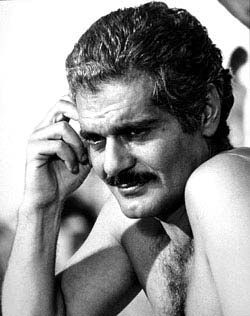
For those of you wondering about Omar Sharif's (pictured) whereabouts, fret no more. Today he's in Cairo (well, he's lived in Egypt all his life), for the opening of the Cairo Film Festival, which started 30 years ago. Sharif is the honorary president of the festival. The event goes on until 8 December and will be dedicated to the Late Nobel Prize Laureate Naguib Mahfouz, who died earlier this year. Films based on his novels will be screened.

The festival will feature Arab and international movie stars such as the American actor Dany Glover and the British actress Jacqueline Bisset besides Jeremy Irons and Julia Ormond who will attend the festival's different sections. These include "The Official Contest", "Guest of Honor", "Arab Films Competition", "Arabs in International Movies", "Panorama of Lebanese Movies" and "Panorama of the Egyptian Cinema".

Cairo Film Festival +

21/11/2006

RIP Robert Altman

The legends seem to keep dropping this year, don't they? RIP big man - for the last five minutes of The Player alone you were totally CLASSIC!!

20/11/2006

Sighting of the month: Matt Dillon in the Amazon

We spotted Matt Dillon visiting an environmental project in the Amazon during his attendance at the Manaus (the capital of the Amazon) film festival. Shall we rename him 'Mata Dillon' in reference to the Portuguese word for jungle? Or am I paying too much attention to the antics involved in headline writing on British tabloids?

Mata Dilllon +

Round up: Latin American and German cinema in London

In the run-up to the Christmas season (definitely a bad cinema season), there are quite a few options around London for those who want to get a proper film fix before heading off to the Christmas break to watch The Sound of Music for the umpteenth time.

The charity Discovering Latin America, whose main goal is to publicise Latin American culture abroad and raise funds for social projects it chooses to champion, arrives at the
5th edition of its annual film festival on Thursday, 23/11, running until 03/12. The festival will take place at the Odeon Covent Garden and Panton Street in the West End, Tate Modern in the South Bank, The Ritzy Cinema in Brixton and Everyman Cinema in Hampstead. Yours truly will be presenting a section of Brazilian short films at the Ritzy Cinema on 01/12 at 6:30pm, so please come and say hello. The Tate Modern will be showing Luis Bunuel's Viridiana and the rest of the programme is a mixture of films from all over the Latin American continent. Further information from the DLAFF site.


Also starting on 23/11 and running until the 26th is the 9th Festival of German Films promising 'a strong line-up of impressively crafted and compelling new features and documentaries from some of the most exciting German filmmakers working today'. The event also features a section called Critical Cinema of East Germany, presented by the London Goethe-Institut plus the regular Next Generation strand which showcases live-action and animated shorts from German film school graduates. More info here.


(Still from Dog Pound, DLAFF, screening on 3/12)


13/11/2006

David Lynch's cow stunt

David Lynch is back after a five-year hiatus with a new feature film, Inland Empire, which reunites the top American surrealist with the ever lovely Laura Dern (Blue Velvet, Wild at Heart). Reviews have been good , but so far there's no UK release date scheduled. However, Lynch has been busy promoting his film, due out in the U.S. next month (15/12) and even took to the streets of Los Angeles to promote it. Don't you just love this man?


09/11/2006

See it: Stella Polare

Anyone attending the Leeds International Film Festival should check out the striking Stella Polare (pictured left), by British filmmakers Anthea Kennedy and Ian Wilbin, which screens today at 1:45pm and tomorrow at 2:15 at the Carriageworks. Stella Polare is everything that British films quite often are not: meditative, mysterious and oblivious of the strictures of conventional narrative. I saw this film at the Osnabruck Media Art festival in May this year and absolutely loved it. An inspiration for indepedent filmmakers working with video technology; it shows how much can be achieved.

07/11/2006

Festival alert: Kassel and Leeds

The 23rd edition of the Kassel Film and Video Festival starts today and runs until the 12th. 214 current films and videos from 21 countries will be screened within the next six days, one third of which are premieres. About 100 directors and artists are expected to attend the festival for the presentation and discussion of their works. The exhibition MONITORING presents 16 media installations from five countries. The opening is going to take place on November 8 at 7 pm. The interdisciplinary conference interfiction as well as the Live Visuals in the DokfestLounge will close the festival. Altogether 68 contributions out of the program will compete for the three prizes of €10,000 in total and the A38-Artist-in-Residence Grant Kassel-Halle.

Kassel film and video festival +


Elsewhere, the Leeds International Film Festival is now well under way. The organisers remind us that although the Fanomenon Horror Weekend has now ended, there's a chance to catch some of the films at their repeat screenings - Silver Méliès winner Isolation (Tue 7 Nov), Resonnances, The Woods (Thu 9 Nov), Gruesome and Dark Remains (Fri 10 Nov). Still to come in the Film Festival are American Hardcore, a film about the American Punk Explosion (Wed 8 Nov), presented by director Paul Rachman and writer Steven Blush. Beach Party at the Threshold of Hell and Monks: The Transatlantic Feedback can be seen again later this week: the former plays on Sat 11 Nov (Hyde Park Picture House, 9:00pm) while the latter will be showing on Mon 6 Nov (The Carriageworks, 3:15pm).

Leeds film festival +

03/11/2006

Danish Silent Classics on DVD

A delicious and not to mention important selection of Danish silent film classics has been restored and is now available for purchase online on the website of the Danish Film Institute. The selection includes films by internationally renowned director Carl Theodor Dreyer; the charismatic actor-director Benjamin Christensen and films starring Denmark's most prominent thespians of the silent period: actor Valdemar Psilander and actress Asta Nielsen.

A total of nine DVDs are available at present, while two more will be ready for sale in the coming months. These include films by Holger-Madsen (Himmelskibet, from 1918), August Blom (Verdens undergang/The End of the World, from 1916) and Carl Theodor Dreyer (Blade af Satan's Bog/Leaves from Satan's Book from 1921, Der var engang/Once Upon A Time, 1922).

The launch of this DVD collection (with English intertitles) is the conclusion of an ambitious project of the DFI Film Archive, which began in 2003, when the Danish Ministry of Culture allocated 1 million DKK (about £90,000) to a project for the digitization of national film classics from the silent period. The title list and more information can be found on the site of the Danish Film Institute.